Persian Pottery
Persian Pottery
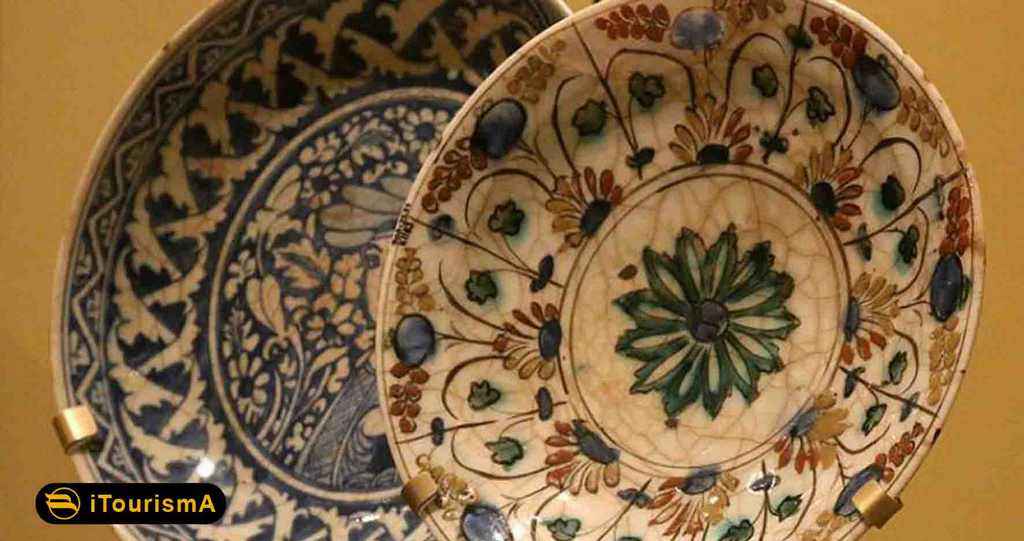
Iranian pottery production presents a continuous history from the beginning of Iranian history until the present day. In Iran pottery manufacture has a long and brilliant history. Due to the special geographical position of the country, being at the crossroads of ancient civilizations and on important caravan routes, almost every part of Iran was, at times, involved in pottery making. Yet, recent excavations and archaeological research revealed that there were four major pottery-manufacturing areas in the Iranian plateau. These included the western part of the country, namely the area west of the Zagros Mountains (Lorestan), and the area south of the Caspian Sea (Gilan and Mazandaran provinces).
One of the earliest known and excavated prehistoric sites that produced pottery is Ganj Darreh Tappeh in the Kermanshah region. Another great discovery was made south of the Caspian Sea in a cave, in the so-called Kamarband, (Belt cave) near present day Behshahr.
With the invention and the introduction of the potter’s wheel, it became possible to produce better quality and symmetrically-shaped vessels; the number of pottery types made was greatly increased as well. The decoration of these objects was made with much greater care and artistic skill, and the designs used were greatly enriched and carefully selected.

In general the history of Iranian-Islamic pottery can be divided into three main periods Post-Sassanian or Early Islamic Period; Middle Islamic Period; Later Islamic Period.
In these three periods, which lasted for more than a thousand years, numerous pottery centers were established, which produced innumerable types of wares.
Currently, pottery art is popular in traditional and industrial ways in Iran, and its main centers are: Laljin, Hamedan, Meybod, Yazd, Kalporgan, Minab, Gilan, Gonabad, Shahreza and etc.
Laljin
Laljin is known as the Middle East pottery and ceramic works. 80 percent of the population of the city of Laljin is engaged in pottery and ceramic works.