Posts

Garmsar Salt Mines

Salt and tourism hub of salt Iran Semnan province can be called dome and several salt mines in the province could be one of the most important phenomena geomorphological and geological attractions convert. Salt mines between Eyvanaki and Garmsar, resulting from the activities of Qom salt dome. Visit the mines in the control area with basic room and will be picked up. This style of rainwater harvesting to prevent mine. Stand tall ceilings and huge salt mines and in front of the illusion is astonishing.

معادن نمک گرمسار - Garmsar Salt Mines

Salar salt mine is located in Garmsar, a city in Semnan province. It sits in a unique geographical location, between Firouzkuh and Damavand in the north, Semnan in the east, Qom and the Salt Desert in the south, and Varamin in the west. On the other hand, one of the most interesting mines is the ancient Kuhdasht salt mine and due to the extraction of salt, a tunnel or cave is formed with a length of 1.5 kilometers. A low, arid, red-brown ridge scalloped into corrugated hills follows the Garmsar–Qom Hwy south. The outer form of this mine is in the form of a mountain that by the extraction of salt from this mine, a handmade cave has been created. There are dark colored salt stones at the entrance to the cave, and as we move forward, the colors of the rocks become lighter and lighter. Many salt droplets like sharp spears hang from the ceiling of the cave. A vibrant, colorful corridor extends 1.5 kilometers across the salt mine. In the part of Kuhdasht-e Kohan Salt Mine in Garmsar, a green lake has been created by rain, which shines as a jewel and enchants you. In this cave, the salt columns with height of 12 meters add to the beauty of this natural attraction. Salt rock has many therapeutic properties that can be useful in treating some physical and mental illnesses.

معادن نمک گرمسار - Garmsar Salt Mines

Meymand Village

Meymand is a village in Kerman Province close to the city of Shahr-e babak where the founder of the Sassanid dynasty, Ardeshir the Unifier, is said to have been born. Based on archeological finds, experts believe the village is 3,000 to 8,000 years old. The village thrived under the Sassanid’s and even today Middle Persian words are common in the dialect spoken by villagers. Meymand village has been continuously inhabited for 2000 to 3000 years making it one of Iran’s four oldest surviving villages. Meymand resembles Cappadocia in Turkey and Kandovan Village in East Azerbaijan Province in that all three have stone-carved homes. Unlike Cappadocia which was abandoned by its residents, Meymand is still inhabited and while Kandovan was built to protect its population from attacks by the invading Mongol army in the 13th century, there is no evidence that Meymand ever came under attack. The village is a UNESCO world heritage site and was awarded UNESCO’s 2005 Melina Mercury prize.

میمند شهربابک روستایی صخره‌ای و دستکند با چند هزار سال قدمت

Meymand is one of the districts of Shahr-e-Babak, and is one of the spectacular villages of Iran. Here there are a mass of crypts, with 15 stony, circular and roof-less chambers. The same covers an area of approximately 400 sq. m. This vicinity seems to be a place of burial, as skeleton bones and other articles have been found there. The ancient houses in this rural settlement resemble minarets constructed in the breast of these hard stone mountains. In this minaret shaped dwellings which are very strong and durable, are chambers, corridors and pillars displaying an intriguing architecture.

میمند شهربابک روستایی صخره‌ای و دستکند با چند هزار سال قدمت

Meymand has extremely cold winters and mild summers. Villagers live a semi-nomadic lifestyle moving between four different settlements in the village throughout the year. From the end of winter until late spring, villagers live in Sar-e Aghol houses on the southern fields. There are in two different types Sar-e Aghol homes: Markhaneh and Mashkdan. Markhaneh structures are circular houses built partially underground to shelter inhabitants from the wind. They have low dry stone walls and roof coverings of wood and wild thistles. Temperatures inside these homes seldom vary and are almost always consistent. Mashkdan homes are built above ground and have dry stone walls with conical roofs made of branches. Some of the buildings used to house cattle have barrel vaulted brick or stone roofs.

میمند شهربابک روستایی صخره‌ای و دستکند با چند هزار سال قدمت

Skiing

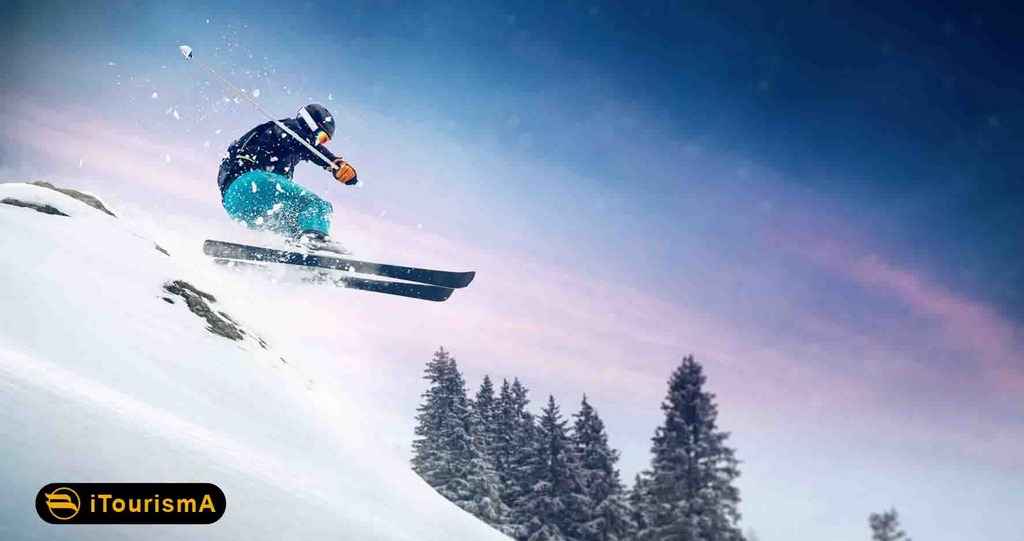
Skiing, recreation, sport, and mode of transportation that involves moving over snow by the use of a pair of long, flat runners called skis, attached or bound to shoes or boots. Competitive skiing is divided into Alpine, Nordic, and freestyle events. Competitions are also held in events such as speed skiing and snowboarding.

Skiing - ورزش اسکی

The oldest known skis date to between 8000 and 7000 BC and were discovered in Russia. Early skis have been found in many areas of northern Europe. Some of the first skis were short and broad, resembling snowshoes more than modern skis. Skiing certainly was not confined to Europe, though, as the first written references to skiing are from the Han dynasty and describe skiing in northern China. Many peoples who lived in climates with snow for many months of the year developed some form of skiing. Skiing also has long been employed for military purposes. Norwegian men on skis reconnoitred before the Battle of Oslo. There are much types of skiing as bellow.

Nordic Skiing

Nordic, or classic, skiing consists of techniques and events that evolved in the hilly terrain of Norway and the other Scandinavian countries.

Alpine Skiing

By the start of the 20th century, a second upstart style of skiing competition had joined the older established cross-country skiing races and ski-jumping contests of Nordic skiing. Modern Alpine competitive skiing is divided into four races—slalom, giant slalom, supergiant slalom, and downhill; each of which is progressively faster and has fewer turns than its predecessor on the list.

Freestyle Skiing

Freestyle skiing focuses on acrobatics and includes three events: acro, aerials, and moguls. Mogul skiing, the navigation of large bumps (moguls) on the slope, was incorporated into competition shortly after the introduction of aerials.

Governing Body

In 1924, International Ski Federation, was founded as the world governing body for skiing.

Skiing - ورزش اسکی

Early skis designed for sport and recreation were made from one piece of wood, often hickory, but laminated constructions began to be used in the 1930s. In the 1950s plastic running surfaces on the bottom of skis increased their speed and durability. By the 1990s skis were typically made by surrounding a foam core with wood, wrapping both layers with fiberglass combined with Kevlar, aluminum, titanium, or carbon for strength, and finally adding a plastic base. As early as the 19th century, Norwegians and others had designed skis with sides that curved up to form parabolic profiles when seen from an end.

Hyrcanian Forest

According to UNESCO, Hyrcanian Forest form a unique forested massif that stretches 850 km along the southern coast of the Caspian Sea. The history of these broad-leaved forests dates back 25 to 50 million years, when they covered most of this Northern Temperate region. These ancient forest areas retreated during the Quaternary glaciations and then expanded again as the climate became milder. Their floristic biodiversity is remarkable: 44% of the vascular plants known in Iran are found in the Hyrcanian region, which only covers 7% of the country. Hyrcanian Forest (also known as Caspian Forest), extends from the south of Azerbaijan to about 900 km to the east to the Iranian northern provinces of Gilan, Mazandaran and Golestan. This forest forms the outermost boundary of the west-Eurasian memorial deciduous forests to alpine thorn cushion corridors and forest-free dry vegetation of the Iranian highlands and Central Asia.

Hyrcanian Forest

The Hyrcanian Forest cover the northern slope of the Alborz Mountain in Iran at the southern edge of the Caspian Sea and it contains very rich ecosystems due to the particular orographic and climatic situation. Hyrcanian forest contain the most important and significant natural habitats for conservation of biological diversity, including those containing threatened species of outstanding universal value from the point of view of science or conservation. It also contains superlative natural phenomena or areas of exceptional natural beauty and aesthetic importance. It is outstanding examples in the record of significant on-going geological processes in the development of landforms and significant geomorphic or physiographic features. It is also outstanding example representing significant ongoing ecological and biological processes in the evolution and development of terrestrial, ecosystems and communities of plants.

Hyrcanian Forest

To date, 180 species of birds typical of broad-leaved temperate forests and 58 mammal species have been recorded, including the iconic Persian Leopard. The ecosystems of the property support populations of many forest birds and mammals of the Hyrcanian region which are significant on national, regional and global scales. To date, 180 species of birds typical of broadleaved temperate forests have been recorded in the Hyrcanian region including Steppe Eagle, European Turtle Dove, Eastern Imperial Eagle, European Roller, Semi-collared Flycatcher and Caspian Tit. Some 58 mammal species have been recorded across the region, including the iconic Persian Leopard and the threatened Wild Goat.

Hyrcanian Forest

Nowruz

Nowruz is the Persian, or Iranian, spring celebration of the New Year. It’s the most important festival of the year in Iran, and it’s a public holiday there and in Kazakhstan, Azerbaijan, Afghanistan, Albania and other countries in South and Central Asia. It begins at the exact day, hour and minute of the spring equinox, when night and day are of equal length. This is usually on 21 March. It’s the day when winter changes into spring, and it feels like a new beginning. People prepare for Nowruz by cleaning the whole house, and everyone in the family helps out. Carpets, windows and curtains are cleaned. Anything broken is repaired or replaced. Silverware is polished. The house is decorated with flowers. By doing this spring cleaning, people wash away the bad things from the previous year and prepare for better things to come in the New Year. They also put on brand new clothes to symbolize a fresh start. After thousands of years in the making, Nowruz remains too beloved, universal, and deeply embedded in Persian culture to ignore.

Nowruz

Persians celebrate around a special table in their house. It’s called the haft-seen, which means “seven Ss”. On it, there are seven special objects, all of which begin with letter “s” sound in the Farsi language and which symbolize something. There are actually more than seven, but here are some of the most common.

Sabzeh: Some kind of sprout or grass that will continue to grow in the weeks leading up to the holiday, for rebirth and renewal

Senjed: Dried fruit, ideally a sweet fruit from a lotus tree, for love

Sib: Apples, for beauty and health

Seer: Garlic, for medicine and taking care of oneself

Samanu: A sweet pudding, for wealth and fertility

Serkeh: Vinegar, for the patience and wisdom that comes with aging

Sumac: A Persian spice made from crushed sour red berries, for the sunrise of a new day.

While these seven S items are the foundation of a haft-seen, the tradition has evolved to the point where there are several other things you can include. For example, It can be included a mirror symbolizing reflection, colored eggs for fertility, coins for prosperity, and, if we were feeling ambitious, a live goldfish for new life.

Nowruz

Persian leopard

The Persian leopard is the last remaining Panthera species in Iran after the extinction of the Asiatic lion Panthera leo persica and the Caspian tiger Panthera tigris virgata. The leopard has therefore a unique importance for the ecological health of wide areas of natural ecosystems in the country and for the cultural heritage of Iran. The Persian leopard has been widely distributed in West, South and Central Asia since the times of the Pleistocene, but became extinct in some areas. Iran’s mountainous north is home to the greatest concentration of Persian leopards left on earth. Larger than their African cousins, Persian leopards once roamed far into the Caucasus Mountains in central Asia, including parts of Armenia, Azerbaijan and Georgia. Now, only scattered populations of these big cats remain in those countries, often in isolated patches far removed from others of their kind. Iran is leopards’ best chance for survival. Expanding villages, encroaching livestock and busy highways destroy habitat and create hazards for such a wide-ranging predator. In recent years, a new indirect threat has emerged as well: economic sanctions.

Persian Leopard

 Although Iran has an impressive number of parks and protected areas, herders sometimes graze their livestock in prohibited zones. When leopards occasionally kill vulnerable cows or sheep, the herders poison the carcasses to get rid of the offending predator. Cubs are born with their eyes closed, eventually opening after 4-5 days. Their fur is thicker than that of adult Persian leopards. Weaning occurs at 3 months, by which time they start following their mothers on hunting trips. They make it out of their juvenile year only around 50% of the time, as out of a litter of four, only two reach adulthood. Being obligate carnivores, they eat ungulates like roe deer, goitered gazelle, West Caucasian tur, mouflon, wild boar, and onager. However, they can adapt to changes in their diet, depending on food availability. They spend a solitary life, except during the mating season and when a female is raising her cubs. Individuals have well-pronounced territories marked by ground scraping, tree scratching, and urine spraying. These leopards roar and growl threateningly, a trait that they share with tigers, lions and jaguars. It is because a part of their voice box, is actually replaced with a ligament, enabling them to stretch it to have a bigger sound passage, resulting in a wider pitch range.

Persian Leopard

Persian Gazelle

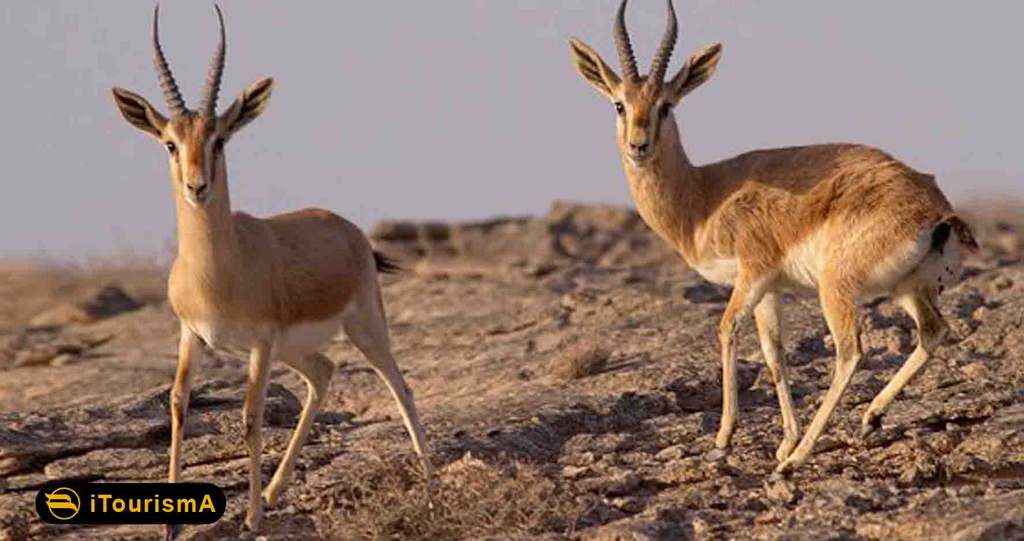
There are three species of gazelle in Iran, including Persian Gazelle, Jabir Gazelle and Mountain Gazelle. Persian Gazelle is the most abundant gazelle species in Iran; unfortunately, in 2008, it was added to the list of vulnerable and endangered animal species of IUCN. The species lives in 15 protected areas in Iran, among which Mouteh Wildlife Refuge is one of the largest populations of Persian Gazelle depending on natural ecosystems. Examining the cytochrome b region in a number of conserved areas of the species showed that all of them belong to a pure population of Persian Gazelle; however, the gazelles living in different habitats are significantly different from each other. Biometric studies on the skull indicated that the gazelles living in the Eastern and Western Zagros Mountains of Iran are distinct from each other.

Persian Gazelle

Persian gazelle mostly feeds on plants with high protein content. Indian or Jabir gazelle is another species of gazelle living in Iran, which is considered as protected and endangered species in the country. Unfortunately, their species status has been so far controversial; thus, it has been not put on the IUCN list. However, there are strong morphological and molecular evidence suggesting that the animal belongs to the Jabir Gazelle species. This species is very similar to the Persian gazelle, but smaller in body size. It should be noted that three subspecies of Jabir gazelle have been identified in Iran. The Mountain gazelle is another species of Iran’s gazelles, which shows more specification in the body color than other species. The only habitat of this species is in the Faroor Island in the Persian Gulf. In general, the three valuable species of Iran’s gazelles are currently in need of need serious protection and support in order to prevent the extinction of such valuable biological resources and preserve them for future generations.

Persian Gazelle

Persian Gazelle is larger than other species in Iran regarding body size, and the antlers are only seen in males. At present, the species lives sporadically in Saudi Arabia, Pakistan, northern Tibet, southeastern Turkey, the Caucasus, Turkmenistan and some plains of Iran. It should be noted that the evidence and the taxidermied sample remained from Dasht-e Moghan gazelles indicate that the gazelles in the plain have been of the geographical races of this species.

Persian Cat

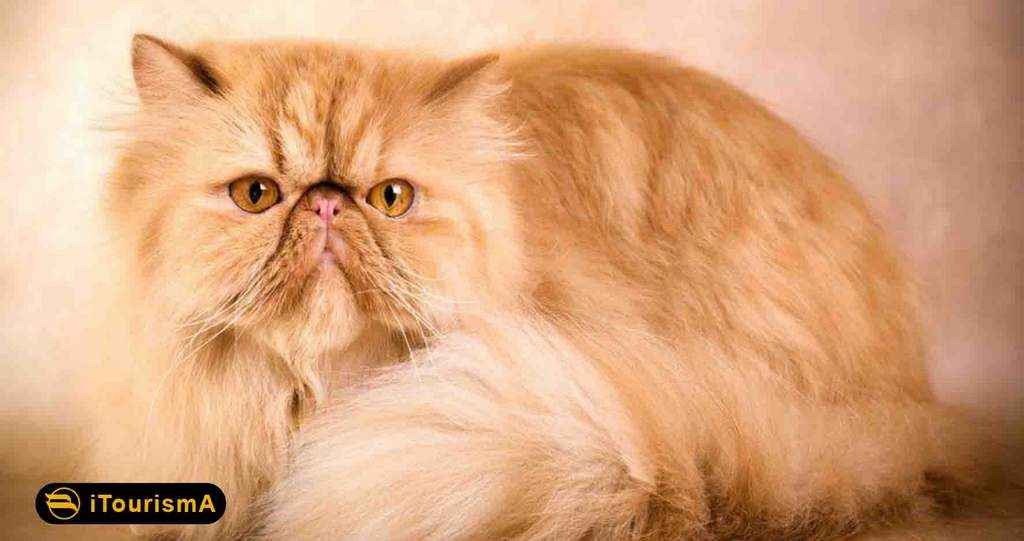
Persian World states that although the history of where this cat originated may be sketchy, breeding programs for Persians began in Italy and France as far back as the 16th Century. The breeding program advanced further and the development of the Persian as known today began in Great Britain. Persians were entered in the first cat shows in Great Britain in the 1800s, and they were a popular pet at the time. By the early 1900s, Americans began to import Persians into the United States. The Persian is usually a medium sized cat, although she is massive and heavily boned. With her masses of fur, she can appear larger than she really is. While there is no particular weight range the Persian should fall in, these cats should be full bodied and balanced. The Persian is an extreme-looking breed. The body is short, but thick with thick legs and a short, thick neck. The tail is short and the ears are small. The head is round with large, round eyes. When viewed in profile her face is flat and the nose changes direction so that what is seen is mostly the colored flesh on her nose.

Persian Cat

The coat on a Persian is thick, full and long. It is fine, but should be lustrous and glossy. The ideal Persian coat has a fine texture and is long, thick and glossy. Variety is truly the spice of life when it comes to coat colors. This breed is divided into no less than seven separate coat color groups, with plenty of choices in each. You can find Persian cats in just about every solid color including black, blue, chocolate, red, lilac, cream and white. Most solid colors are accompanied by copper eyes, except for white Persians that either have copper, blue, or odd-eyes.

 A Persian’s head is easily its most distinctive feature. It’s larger and generally rounder than that of the average cat, with large, round, wide-set eyes and a sweet expression. The ears are fairly small with rounded tips, and they should be set wide apart and tilted slightly forward. The cheeks are also quite round, and the short nose appears to be aligned with the eyes. Some Persian cats have the traditional “doll face” whereas others have a flatter face that is sometimes called “Peke face” because it’s like a Pekingese dog. The flat face Persians tend to be more popular at cat shows but also tend to have more health problems than doll face Persians.

Persian Cat

Mashhad

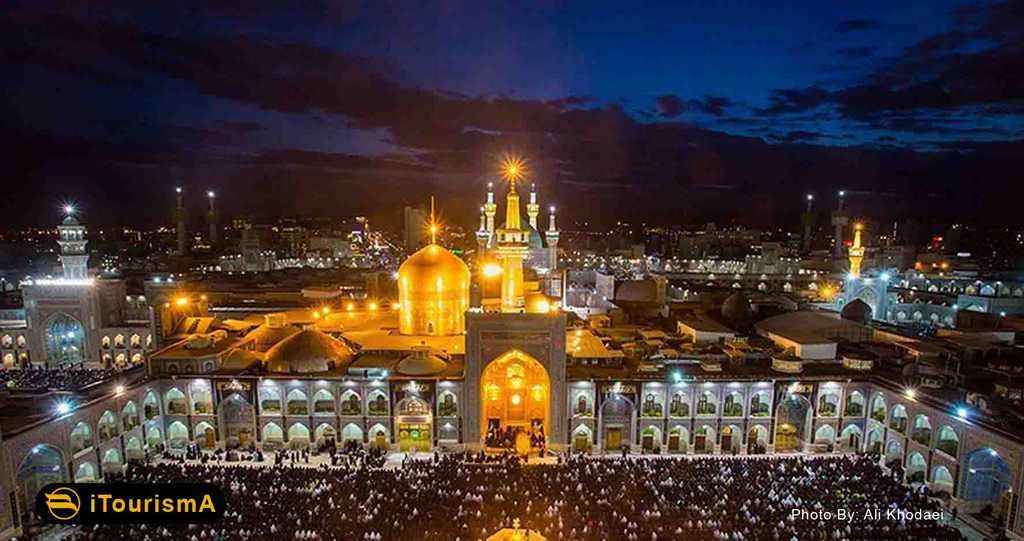
Mashhad is Iran’s holiest and second-largest city. The city is laid out in a roughly circular shape, with the religious edifices and monuments located in the centre and avenues radiating outward to approximately 12 neighborhoods, such as Malekabad, Sajjad, Shahrak-e Azadi, Kuy-e Imam Reza, and Sisabad. Not just a religious city, Mashhad is called the holy city of Iran because it is home to the tomb and shrine of Islam’s eighth Shia Imam, Imam Reza. Every year millions of pilgrims from around the world flock to this shrine, giving it a palpably spiritual and multinational feel. As one of the most magnificent religious places in Iran, Astan Qods Razavi is the symbol of Mashahd where the Islamic art and religion are linked to each other. Located along the Silk Road, it is the economic capital and the intercontinental commercial center in the Central Asia. Mashhad economic activities are dependent on the services, industry and agriculture; however, it is focused on a services-based economy due to the presence of the passengers and pilgrims who travel to there. About 40 percent of Mashhad industry is relied on the food, metal and handicraft industry. Tourism based on pilgrimages to the shrine of Imam Reza is a key part of Mashhad’s economy.

Mashhad

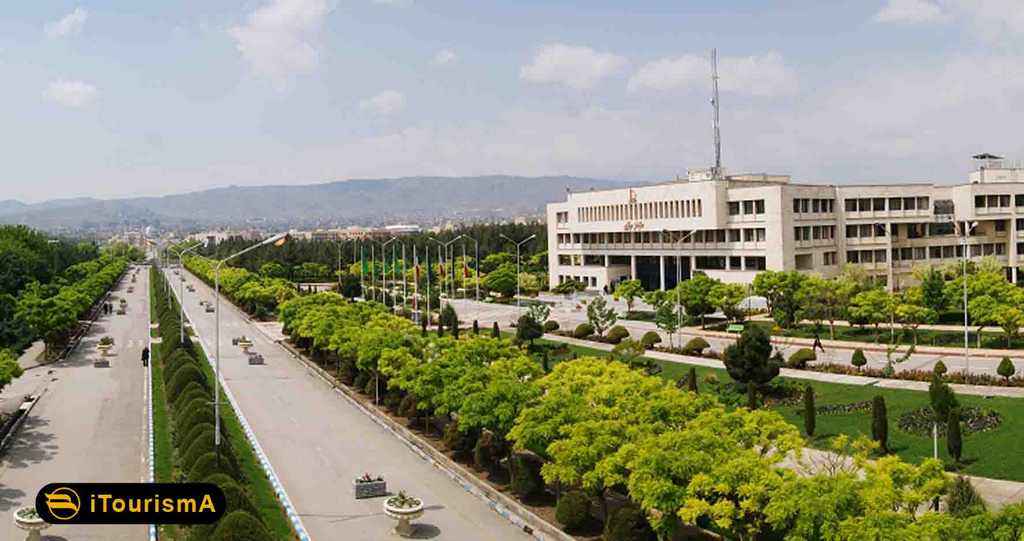
Most of Mashhad people are of Iranian Aryan race, although many Kurds, Turks and Arabs live there. Mashhad is a multiethnic city that includes Persians, Baluchis, Daris, Hazrajatis, Turkmen, Uzbeks, Tajiks, Kurds, and Lurs among its residents. Residents speak in Persian Language, Mashhadi accent and they are the followers of Ja’fari Shiite. Mashhad is the site of a prominent institution of higher education, Ferdowsi University of Mashhad, which has colleges of humanities, mathematics, natural sciences, theology, education, and veterinary medicine.

Mashhad

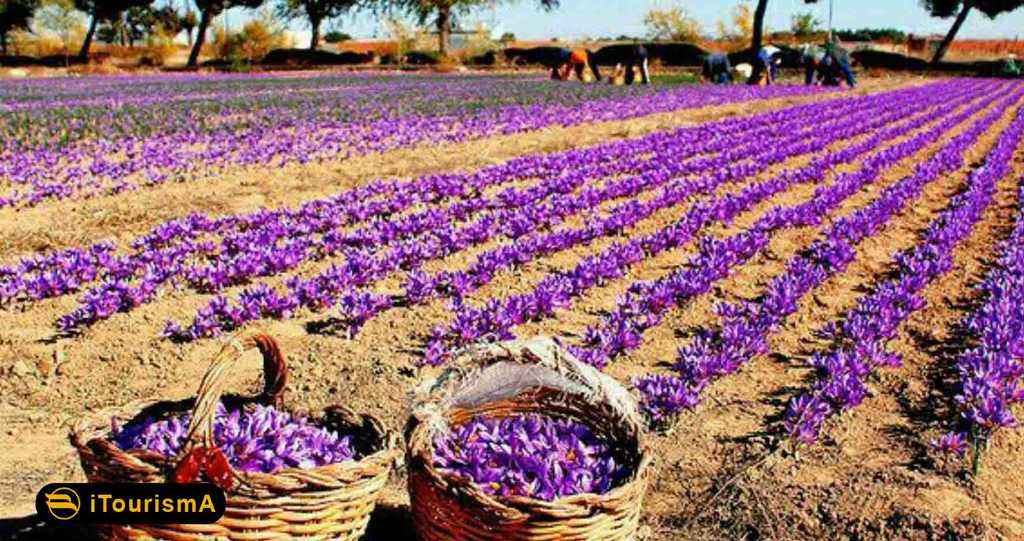
Mashhad is a good place to buy carpets with its own special carpet plans. Mashhad is also known for gemstones. The area with 39 known different varieties of gemstone is rich enough to export gemstones to many other countries. It has about 90 percent of gemstone workshops of the country which produce jewelry in addition to religious accessories such as rosaries and rings. Also the most expensive spice in the world which is Saffron is produced greatly in Mashhad.

Mashhad

Tabriz

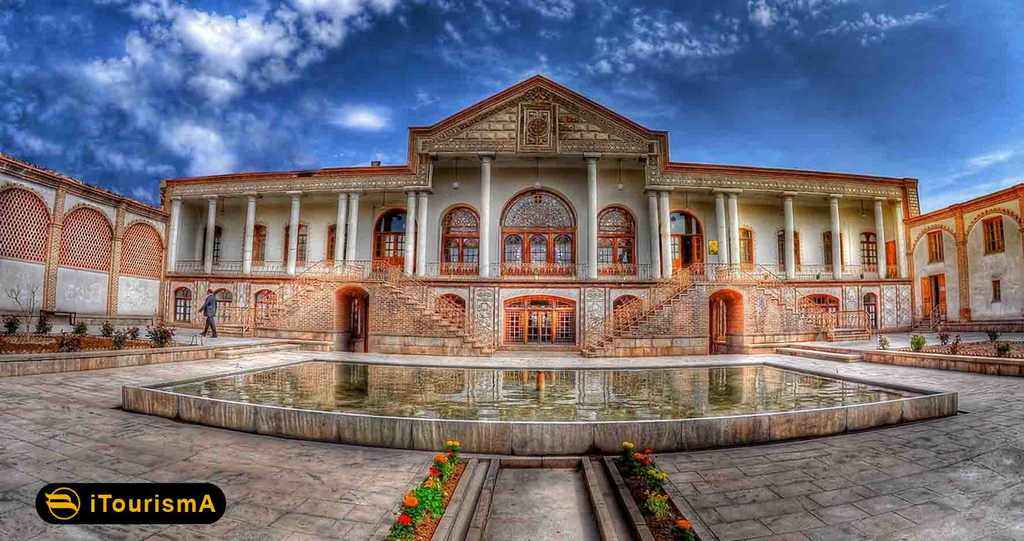
Tabriz is one of the oldest and biggest cities of Iran on the hillside of the Sahand Mountain which is surrounded by mountains in the north, south and east and flat lands as well as the Talkherud salt marsh in the west, like a partly big hollow or a plain with fantastic view among the mountains, at the height of 1350 to 1550 m above the sea level in different areas. Having some of most famous museums, holding some of the cultural events, and harboring a couple of the most prestigious Iranian universities, the city is considered a major hub for science and culture in Iran. Tabriz was named by the Organization of Islamic Conference as the city of the Islamic world tourism. Tabriz was the residence of the crown prince under the Qajar kings. Tabriz has a high political and economic position and best-known as the “Cradle of Investment” due to the ability to attract large investments from private sectors. It is ranked 1 in attracting investment among Iran cities for five consecutive years.

Tabriz

The main industrial productions of this area are foodstuffs, chemicals, non-metallic mineral, basic metals, textiles and carpet machinery.  In addition, Tabriz has been a heavy industrial center including machinery and equipment industries. It is a leading center for Leather production, in addition to being famous for the other arts and handicrafts, for a long time. Tabriz and Maragheh handmade carpets are famous in all around the world due to their specific design and high quality that their export is considered as one of the significant sources of foreign exchanges in Iran.  Today, Tabriz people speak in Turkish language and this city was the capital of Shia in all around the world and most of its residents are followers of Asna Ashari Shia.

Tabriz

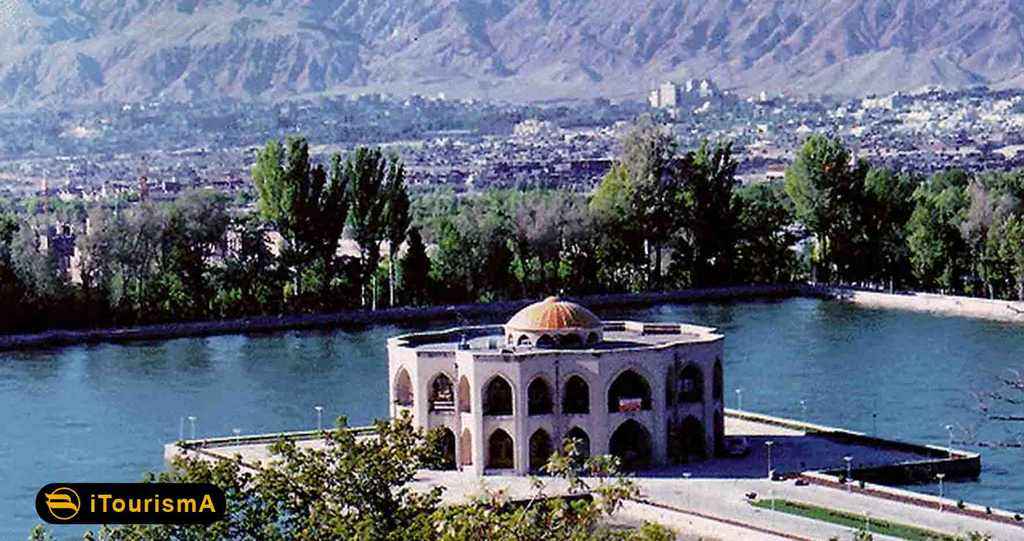
With a very rich history, Tabriz used to house many historical monuments. Unfortunately, many of them were destroyed in repeated invasions and attacks of foreign forces, negligence of the ruling governments, and natural disasters such as earthquakes and floods. What remains now mostly dates back to the Ilkhanids, the Safavids, and the Qajars. Some of the monuments are unrivaled masterpieces of architecture. The most famous monuments of Tabriz are buildings like the Blue Mosque, El Goli Garden, Shahrdari Square, Sa’at Tower and so on.

Tabriz

Portfolio Items